Haro, Guts, Girdles and Hatts – some peculiarities of Guernsey law
Originally published in En Voyage, November/December 2018 Issue
The Bailiwick of Guernsey was originally part of the Duchy of Normandy but in 1204 when English troops were driven from Normandy, the islands remained the possession of the English Crown.


The Bailiwick of Guernsey has always maintained its own legal system which, as a result, has its origins in both common and civil law principles. The roots of Guernsey’s legal system continue to reflect the ancient customary laws of Normandy, so that even today Guernsey lawyers are required to attend the University of Caen before they can be admitted to the Bar. Sometimes it is still necessary to refer in court to medieval Norman or early modern French legal texts. This is particularly so in areas such as land law, succession and inheritance, which contain concepts that many English lawyers would find quite alien.
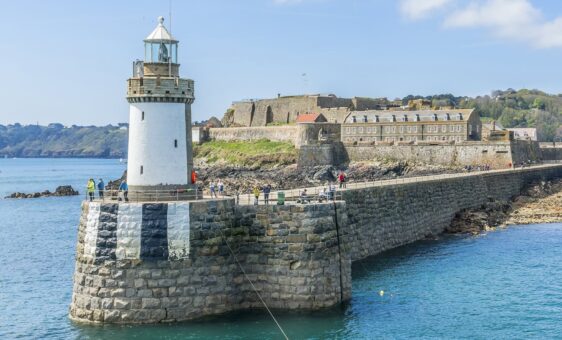
One example of Guernsey’s unusual legal heritage is the Clameur de Haro which is a form of injunction. To raise the Clameur the plaintiff or “criant”, in the presence of two witnesses, must fall to their knees and recite the words “Haro, Haro ả l’aide mon prince, on me fait tort”. They must then recite the Lord’s prayer in French. The alleged wrong-doer must then immediately stop doing whatever it was that is the subject of the complaint. The traditional penalty for not immediately stopping was a night of imprisonment in the lowest dungeon of Castle Cornet. The same penalty was likewise imposed on a criant who raised the Clameur without good cause.
Clameurs have been raised over the centuries for many reasons; legend has it that it was raised at the funeral of William the Conqueror in 1087. When William built the L’Abbaye aux Hommes in Caen, some houses were demolished to make room and one of the owners was never recompensed. When the procession arrived at the Abbey, the man raised the Clameur and the King could not be interred before the man was compensated. The story continues that William’s body was in such a state of decomposition by the time he was finally laid to rest, that it duly exploded all over everyone in attendance who were covered in the former Duke’s putrefied innards and decomposing flesh. What one might call going out with a bang.
The Clameur is still invoked from time to time. In August 2018, a lady invoked the Clameur de Haro outside a construction site in St Peter Port. She wanted the building work to be stopped. The Clameur was unsuccessful but fortunately for the criant, she was not imprisoned in Castle Cornet (nor any other dungeon) on this occasion!
The Clameur is not by any means the only vestige of our ancient laws. In the past rentes were used as a means of securing borrowing against or purchasing land; a type of mortgage if you will. A rente is an obligation to pay a certain amount, originally in kind. So one could be asked to pay one’s rentes in bushels of wheat, in poulage (chickens) or eggs (a quarantaine (40) being the normal quantity). To rid one’s conveyance of rentes one can pay a certain amount up front and get the rentes removed; however the “in kind” conversion rates have never taken into account inflation and as such most rentes are rarely paid these days. Some old conveyances do still have such payments attached to them, however, and unless they have been abandoned or have not been paid or requested for payment in over 20 years, they are legally still due.
Finally, in days of old any person declared “en désastre” (akin to personal bankruptcy in Guernsey) was made to “come into the open court and pull off there his girdle and lay it downe upon the table and ever after that he was (according to the ancient custome) to weare a green hatt”.
This practice is most definitely no longer practiced and the laws of bankruptcy are an area which has been under review for some time in Guernsey. Given that the Island’s colour is green, however, I do wonder what our forefathers would make of the crowds at our local sporting matches!